
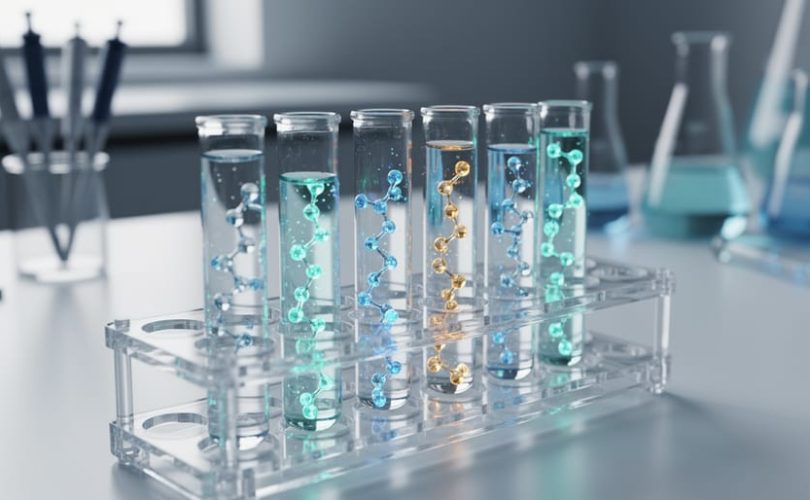
Research peptides are short chains of amino acids, usually fewer than 50 linked together, that laboratories use to study biological processes in controlled, non-clinical settings. Suppliers such as Kylo Peptides Canada sort them into categories based on structure, source, and intended research function, and those groupings drive everything from labelling to storage to price. For a first-time buyer, a catalogue can look like a wall of unfamiliar names. Understanding the categories turns it into a map.
A reputable supplier organizes products this way so researchers can match a compound to a specific study design. Everything discussed here is for research use only, with no dosing, therapeutic, or human-use claims.
This guide defines the main peptide types, explains how they’re made, and shows how labs apply each category. You’ll also get a buyer checklist, myth-versus-fact callouts, and answers to common questions. Careful, informed purchasing matters in any field, much like the groundwork behind prevention work or the planning behind housing supports: good decisions start with clear definitions.
What Peptides Are: A Plain-Language Definition

A peptide is a short chain of amino acids joined together. The difference between a peptide and a protein comes down mostly to size and structure. Peptides are usually under about 50 amino acids long, while proteins are longer chains that fold into complex three-dimensional shapes. Think of a peptide as a short sentence and a protein as a full chapter.
Here are the core terms you’ll see on product pages and certificates:
- Amino acid
- A small building-block molecule. Twenty standard amino acids combine in different orders to make peptides and proteins.
- Peptide bond
- The chemical link that joins one amino acid to the next in a chain.
- Residue
- An individual amino acid once it is part of a chain. A peptide with ten residues contains ten linked amino acids.
- Sequence
- The exact order of residues in a peptide. Change the order and you have a different molecule.
- Oligopeptide
- A short peptide, generally a handful to around twenty residues.
- Protein
- A long, folded chain of amino acids, typically larger than 50 residues.
These boundaries are conventions, not hard rules, so you may see slightly different cut-offs between suppliers.
Why does categorizing peptides matter? A category tells you what a product is meant for, so it hints at how it should be handled and stored. It also signals what regulatory expectations may apply, and what a reputable supplier should be able to document, such as sequence, purity, and batch records. When a listing is vague about its category, that is often your first cue to ask more questions before you buy.
How Peptides Are Made and Why It Shapes Their Category
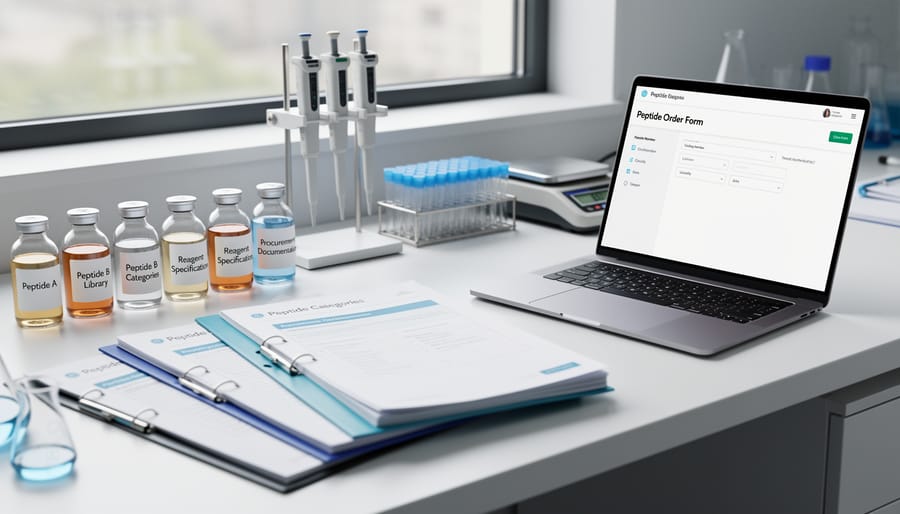
Most research peptides arrive through one of three routes, and the route shapes almost everything a buyer cares about.
The most common is solid-phase peptide synthesis where amino acids are added one at a time to a chain anchored on a resin bead. It’s flexible and fast, and it lets suppliers add labels or modifications at precise positions. The trade-off is length. Each coupling step has a small failure rate, and those errors compound, so yields and purity drop as chains get longer. Beyond roughly 50 residues, synthesis gets difficult and costly.
Recombinant methods work differently. Cells such as bacteria or yeast are engineered to produce the peptide, which suits longer sequences and larger batches. Costs fall at scale, but the process takes more upfront development, and the product needs careful cleanup to remove cell-derived material. Production method also affects what you can request, since recombinant products generally can’t carry unnatural amino acids.
Extraction from natural sources is the least common route. It can yield peptides in their native form, but batches vary, and separating one peptide from a complex mixture is demanding.
For buyers, here’s the practical takeaway. A catalogue’s “synthetic,” “recombinant,” or “natural” label signals likely length limits, impurity profiles, and price range. It also tells you which documents to ask for before you order.
Types of Peptides: The Main Categories Buyers Will See
Categories by Length and Structure
Length is the first lens most catalogues use, and it is the easiest one to read. Oligopeptides are short chains, usually two to about twenty amino acids. Polypeptides are longer, often running into the dozens, and the boundary between a long peptide and a small protein is blurry. Suppliers draw that line differently, so check how a listing defines its terms.
Structure matters too. Most peptides are linear, meaning the amino acids form an open chain with two free ends. Cyclic peptides are joined into a ring, either head to tail or through a bridge such as a disulfide bond. That ring usually makes the molecule sturdier and more resistant to breakdown, but it adds synthesis steps.
Length drives cost more than almost anything else. Every added amino acid is another chemical coupling step, and small losses compound. A 10-residue peptide is routine to make and purify. A 50-residue one is harder, yields less, and costs noticeably more. Longer sequences can also clump or degrade faster, which affects storage and shelf life.
Categories by Source: Synthetic, Recombinant, and Natural
Where a peptide comes from shapes what you should expect on the certificate of analysis, how it was documented, and which experiments it suits. Three source categories show up most often in catalogues.
Synthetic peptides are built chemically, one amino acid at a time. Because the sequence is fully controlled, suppliers can offer custom sequences, modifications, and defined purity levels. Expect a certificate of analysis with HPLC purity and mass spectrometry confirmation. Synthetic production suits short to medium sequences and most routine assay, screening, and antibody work.
Recombinant peptides are made by living cells, such as bacteria or yeast, that have been engineered to express the sequence. This route is more practical for longer chains. Documentation should address the expression system and the removal of host-cell material, since leftover contaminants can interfere with sensitive cell-based work.
Natural peptides are extracted from tissues or other biological sources. They can reflect authentic biological forms, but batch-to-batch variability is common, so ask how the material was purified and characterized.
None of these labels guarantees quality. Match the source to the experiment, and ask for the supporting documents.
Categories by Function and Research Area
Many catalogues sort peptides by what researchers study them for. These labels describe research interest, not proven benefit, so treat them as a starting point for searching rather than a quality signal.
Signalling peptides are sequences modelled on molecules that cells use to communicate. Labs use them to study receptor binding and cell responses in controlled assays. Antimicrobial peptides are short, often positively charged sequences studied for how they interact with bacterial membranes, mostly in microbiology and materials research.
Enzyme substrates and inhibitors are designed to be cut by, or to block, a particular enzyme. Substrates often carry a fluorescent tag so activity can be measured, which makes them common in assay development and screening. Structural or epitope peptides copy a short stretch of a larger protein. Epitope peptides are widely used to raise or test antibodies, while structural ones help researchers examine how a protein folds or binds.
Categories overlap, and one sequence can appear under several headings. A listing that says “signalling” or “antimicrobial” tells you the research area, not the grade, purity or documentation. Always check the certificate of analysis before you rely on the category name.
Categories by Modification and Grade
Peptides can be altered after the basic sequence is built, and suppliers usually list those changes alongside a quality grade. Both affect what you receive.
Common modifications include acetylation (capping the amino end), amidation (capping the carboxyl end), labelling with a fluorescent dye or biotin tag, and phosphorylation of specific residues. Capping often makes a peptide behave more like a segment inside a larger protein, which suits binding and enzyme studies. Labels let you detect or capture a peptide, and phosphorylated versions are common in signalling research. Each change adds cost and synthesis difficulty, so request only what the experiment needs.
Grade describes how much of the material is the target peptide. Crude grade is the cheapest and fine for early screening or antibody-raising work. Desalted grade removes small leftover chemicals and suits many routine assays. Purified grades, often above 90 to 95 percent, are typical for quantitative or cell-based studies, and high-purity grades above 98 percent are reserved for sensitive, reference-standard, or structural work. Higher grade is not automatically better. It is better only when your method demands it.
How Categories Are Used in Laboratory Settings
Laboratories rarely pick a peptide by name alone. They start with the question the experiment needs to answer, then work backward to the category, modification, and grade that can support it. A peptide that works well in one setting can be a poor fit in another, so the experiment’s requirements drive the choice.
Here are some common applications and the category or grade that usually fits:
- Assay development: synthetic peptides with defined sequences, often purified to a moderate or high grade for consistent results.
- Antibody production: epitope peptides, frequently with a carrier-linking modification and a purified grade.
- Cell-culture studies: high-purity peptides, since impurities can interfere with sensitive cells.
- Screening: enzyme substrates or inhibitors, where desalted or purified grades often balance cost against volume.
- Reference standards: high-purity, well-documented peptides with a full certificate of analysis.
- Teaching labs: lower-cost crude or desalted peptides, where demonstration matters more than precision.
These pairings are general patterns, not rules. A screening project with thousands of samples may accept a lower grade to keep costs manageable, while a single quantitative assay may justify a premium grade. Labelled or phosphorylated versions come into play when a method needs to track or detect a specific chemical change.
All of this applies to research settings only. Research-use-only peptides are not intended for human or animal consumption, and the experiment’s design, not the catalogue label, should be your guide.
Myth vs. Fact: Common Misunderstandings When Buying Peptides
Myth: Higher purity is always better.
Fact: Purity should match the experiment. A teaching demonstration or an initial screen may work fine with desalted material, while quantitative assays or structural work usually call for high-purity grades. Paying for more than you need can quietly eat a budget, and a simple cost analysis of cost per usable experiment often shows where the sweet spot sits.
Myth: A catalogue category guarantees quality.
Fact: Categories are a filing system, not a quality mark. Two listings under the same heading can differ widely in synthesis method, purity, and documentation. Ask for the certificate of analysis and the verification methods behind it, such as HPLC and mass spectrometry.
Myth: Research-grade means approved for any use.
Fact: Research-use-only products are intended for laboratory work only. They are not meant for human or animal consumption, and the label does not mean a product has been evaluated or approved for any other purpose.
Myth: Synthetic means lower quality.
Fact: Synthetic peptides are the standard for many research needs, and their quality depends on process control and testing, not on origin alone.
What to Check Before You Buy: A Practical Checklist for New Laboratory Buyers
Before you place an order, run through a short set of checks. The right ones depend on your role, so start with the list that fits you.
For individual researchers and students
– Match the category and grade to your experiment. A teaching demonstration rarely needs the same purity as a quantitative assay.
– Ask for the certificate of analysis (CoA) for the specific lot you’ll receive, not a generic sample. It should show the sequence, molecular weight, and purity.
– Look for the verification methods behind the purity figure. HPLC (high-performance liquid chromatography) measures purity, and mass spectrometry confirms identity.
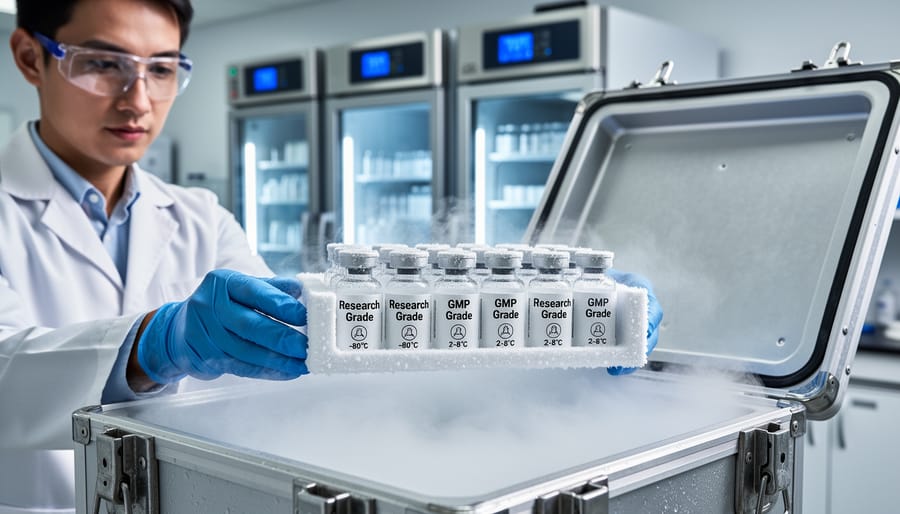
– Check storage and shipping conditions. Many peptides need cold storage, and a supplier that ships without temperature controls is a red flag.
– Get your supervisor’s sign-off before ordering anything.
For lab and institutional purchasers
– Confirm the supplier will name its manufacturing site, testing lab, and contact details. Transparency is a good proxy for reliability.
– Compare cost per usable amount, not just the sticker price. A cheaper crude-grade product can cost more if it fails an assay and you have to repeat it.
– Confirm the product is labelled for research use only, and verify any institutional biosafety or purchasing approvals before the order goes in.
– Plan for delivery windows, cold-chain handling, and who receives the package.
For policymakers and funders
– Set clear procurement rules requiring documentation (CoA, testing method, lot number) from any approved supplier.
– Make sure compliance expectations are written down so smaller labs and education programs aren’t left guessing.
– Consider supporting shared purchasing or training so newer buyers can afford quality materials.
Canadian considerations. Import and sale rules for research materials can change, and they depend on the specific product. Confirm requirements with Health Canada and the Canada Border Services Agency (CBSA) before ordering, and keep your paperwork on file.
Frequently Asked Questions About Peptide Categories

What’s the difference between a peptide and a protein?
It mostly comes down to size and structure. Peptides are short chains of amino acids, often under 50 residues, while proteins are longer chains that fold into complex three-dimensional shapes.
What purity percentage should I look for?
It depends on the experiment. Screening and antibody work may be fine with desalted or lower-purity material, while quantitative assays and reference standards usually call for high-purity grades. Ask for the certificate of analysis rather than relying on a catalogue label.
Are synthetic peptides lower quality than natural ones?
No. Synthetic peptides are the standard in most research labs because the process is controlled and repeatable. Quality depends on the supplier’s synthesis and testing, not on whether the peptide is synthetic.
How should I store peptides?
Follow the supplier’s written instructions first. Lyophilized (freeze-dried) peptides are generally kept cold, dry, and away from light, but handling requirements vary by sequence and modification.
Still have questions? A good first step is to ask your institution’s procurement or research ethics office, since they know your local approval rules. For import and regulatory questions, confirm requirements directly with Health Canada and the Canada Border Services Agency, because rules can change and depend on how a product is classified.
Remember that research-use-only peptides are not intended for human or animal consumption. If a supplier can’t answer your category, purity, or storage questions clearly, that’s useful information in itself.
Peptide categories are really just a shared vocabulary. Once you know whether a listing is sorting by length, source, function, or modification and grade, you can match a product to what your experiment actually needs instead of guessing from a catalogue label. That makes your questions to suppliers sharper: What is the verified purity? Which modifications are included? Can I see the certificate of analysis?
Before you order, check in with your institution’s procurement and research ethics offices. They can confirm approvals and Canadian import requirements, and they’ll save you avoidable delays. Remember, research-use-only products are not intended for human or animal consumption.
Careful, informed buying protects your budget and the integrity of your work. If you’d like to see how the same evidence-first approach applies to community challenges, explore our resources on ending homelessness and the solutions and plans that communities are putting into action.


